Current Location: Blog >
Taiwan VPS
1
Overview: Why choose Taiwan Super Server Cloud Host for big data processing
1) Geographical location advantage: Taiwan is located at the Asia-Pacific network hub, with low intranet latency, which is conducive to regional data synchronization and distributed computing.2) Ultra-high-density computing: Super servers usually use multi-channel CPUs and a large number of memory nodes, which are suitable for memory-intensive Spark/Presto tasks.
3) Storage and IO performance: Equipped with enterprise-grade NVMe and NVMe-oF, random and sequential throughput are significantly better than traditional SATA disks.
4) Network bandwidth and backbone interconnection: The local computer room usually provides multi-line BGP and 10/40/100Gbps ports, which is conducive to massive data transmission.
5) Security and availability: It can be linked with CDN, WAF, and DDoS cleaning services to meet the high availability and anti-attack requirements of the big data platform.
6) Cost and compliance: Relatively flexible billing models and regional compliance policies make it easy to save long-term big data storage and computing costs.
2
Hardware configuration example and performance data demonstration
1) Example configuration A (computing type): 16-core Intel/AMD, 64GB RAM, 1TB NVMe, 1×10Gbps.2) Example configuration B (high IO type): 32-core AMD EPYC, 256GB RAM, 4×2TB NVMe, 2×25Gbps.
3) Example configuration C (super node): 64-core AMD EPYC/Intel, 512GB RAM, 8×4TB NVMe, 2×40/100Gbps.
4) Performance measurement (intranet example): Configuration C sequential read and write throughput is about 6GB/s, random 4K read IOPS is about 200k, and single-node Spark shuffle throughput can reach 8–12GB/s (depending on the network).
5) Scalability: Remote direct-connect storage is achieved through RDMA/NVMe-oF. Network bandwidth becomes a bottleneck during horizontal expansion. It is recommended to use 25/40/100Gbps interconnection.
| Specifications | CPU | Memory | Storage | Bandwidth |
|---|---|---|---|---|
| Standard | 16 cores | 64 GB | 1 TB NVMe | 1×10 Gbps |
| High IO type | 32 cores | 256 GB | 4×2 TB NVMe | 2×25 Gbps |
| Super Node | 64 cores | 512 GB | 8×4 TB NVMe | 2×40/100 Gbps |
3
The synergy of network, domain name, CDN and DDoS defense in big data scenarios
1) DNS and domain name resolution: Use Anycast DNS to reduce resolution delays and ensure stable external access to the scheduling node.2) CDN caches static analysis results: Place commonly used models and visual static resources on CDN to reduce back-end IO pressure.
3) Edge computing and data collection: Perform lightweight pre-processing at PoP in Taiwan to reduce the amount of raw data returned and reduce the load on the central cluster.
4) DDoS defense: Combining cleaning centers and traffic blackhole strategies, typical suppliers can provide cleaning capabilities of ten to hundreds of Gbps to protect hosts from being overwhelmed by abnormal traffic.
5) Monitoring and automatic scaling: Real-time protection is provided through BGP traffic analysis, NetFlow and traffic mirroring, and abnormal traffic triggers automatic expansion or transfer.
6) Bandwidth guarantee strategy: Reserve bandwidth and QoS strategies for key jobs to ensure that batch processing/real-time stream processing do not affect each other.
4
Big data software stack and optimization strategy (Practice on Taiwan super server)
1) Separation of storage and calculation: Use object storage + computing cluster, store in high IO nodes, and compute nodes access through high-speed interconnection.2) Memory optimization: Spark configuration recommendations: executor memory and shuffle memory tuning, the 512GB node can run multiple large jobs concurrently.
3) Localized scheduling: Prioritize scheduling to local high-IO nodes to reduce network shuffle, reduce latency and bandwidth usage.
4) Storage format and compression: Using Parquet/ORC, columnar compression, and column pruning can significantly reduce disk and network I/O.
5) Network optimization: Enable RDMA, TCP window tuning and concurrent connection control to improve throughput in repeated small file/small request scenarios.
6) Security operation: Combine IAM, VPC and subnet isolation, and cooperate with WAF and log audit to ensure platform security and compliance.
5
Real case: Deployment of a regional e-commerce data platform in Taipei computer room
1) Background: An e-commerce company in a certain region needs to make daily settlements and real-time recommendations on user behavior logs, and the data volume increases by about 50TB every day.2) Deployment: Choose Taipei super node cluster, 30 high IO servers (32 cores/256GB/4×2TB NVMe), and cluster bandwidth access 2×40Gbps.
3) Performance results: Daily batch processing (50TB) was completed within 12 hours, and the real-time recommendation delay was reduced from the original 3s to 0.6s.
4) Cost and availability: Through nightly batch scheduling and elastic expansion, the average utilization of storage and computing resources is increased by 20%, and the SLA reaches 99.95%.
5) Security and anti-DDoS: After encountering an application layer amplification attack, the CDN+ cleaning service cleared the malicious traffic within 10 minutes, and the core cluster had no downtime.
6) Experience: The key is to adopt regional nearby collection, CDN caching model and high IO local storage.
6
Conclusion and deployment suggestions
1) Conclusion: Taiwan Province Super Server Cloud Host can significantly improve batch processing and real-time computing performance in big data scenarios with its low latency, high IO and strong network advantages.2) Selection recommendations: Choose computing/high IO/super nodes based on task characteristics. It is recommended to enable 40/100Gbps interconnection for important tasks.
3) Security strategy: Combining Anycast DNS, CDN, WAF and DDoS cleaning to achieve multi-layer protection.
4) Optimization practice: Promote storage and calculation separation, localized scheduling and compressed storage format to reduce IO and network costs.
5) Monitoring and operation and maintenance: Establish end-to-end indicator (IOPS, throughput, RTT, error rate) monitoring, and conduct regular stress testing and disaster recovery drills.
6) Final suggestion: Do a PoC (2-5 nodes) in the early stage to measure actual throughput and latency, and then expand to production scale to ensure that the input-output ratio is maximized.

- Latest articles
- A Must-read For Artist Fans: How To Join The Korean Support Site Group And Optimize The Distribution Of Support Content
- Enterprise Perspective Malaysia Has Servers Deployment Advantages And Cost Assessment Report
- Enterprise Migration To Hong Kong + Comprehensive Assessment Of Costs And Security Of High-defense Servers
- Operation And Maintenance Experience Sharing Vultr Singapore Cn2 Collection Of Common Faults And Quick Recovery Methods
- Comparative Analysis Of Key Points For Selecting Korean Native IP Computer Rooms And Bandwidth Resources
- Contract And Legal Risk Reminder Key Points When Signing A Vps Dedicated Line Singapore Service Contract
- Huawei Cloud Singapore Server Cost Optimization Tips Comparison Between Annual And Monthly Subscription And Pay-as-you-go Billing
- Technical White Paper On The Advantages And Disadvantages Of Vietnam Cn2 Compared With Other Asian Transit Lines
- Small And Medium-sized Enterprise Use Case Analysis Taiwan Server Brand Cloud Server Cost Saving Strategy
- Supplier Evaluation Comparative Analysis Of Taiwan Native IP Vps After-sales Service And SLA Terms
- Popular tags
Pricing Strategy
High Defense Server
Alibaba Singapore Line
Blog
Real-time Communication
Server Reviews
Contract Terms
Event Organization
Use Cases
Vps Tutorial
Data Encryption
Aes-256
Account Binding
Website Security
Multi-ip Singapore Vps
Optimization Suggestions
Apex Singapore Server Room Operator Vps Host Cdnddos Defense Experience Sharing
Microsoft Cloud Server
Vultr
Googlesingapore
Erp Deployment
Bandwidth Strategy
Cheapest
Game Optimization
Cloud Hosting Reviews
Compare
Game Configuration
Hong Kong Access
Novice Tutorial
Technical Details
Related Articles
-
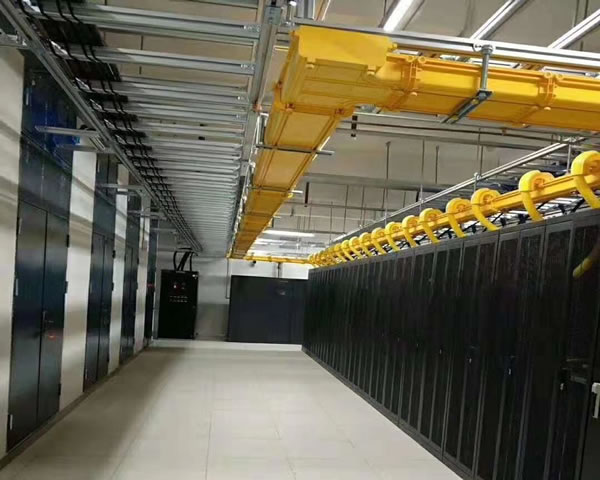
How Can Small And Medium-sized Enterprises Deploy Taiwan Vps Chunghwa Telecom High-defense Cloud Host Protection Solution With A Limited Budget?
for small and medium-sized enterprises, this article introduces how to purchase and deploy taiwan vps and chunghwa telecom high-defense cloud hosts within a limited budget, including cost estimation, specification selection, deployment strategies, purchase channels and continuous optimization suggestions, emphasizing the balance between cost and protection efficiency. -

Understand The Precautions And Tips For Renting VPS In Taiwan
Understand the precautions and techniques for renting VPS in Taiwan, master the key to choosing a suitable VPS, and improve website performance and security. -
Guide To Which Cloud Server Provider Is The Best Choice
this article provides you with a guide to selecting a cloud server in taiwan, analyzing the pros and cons of major providers, and helping you make informed decisions among the numerous options.